- The size of a flashlight - depends on the use
- Lumens, luxes and candelas - and how to measure them
- ANSI/NEMA FL1 -standard
- Valostore's VALOLAB - Introduction
- Info about IP-classification
- Info about ATEX
- Lumonite 5 year warranty
- Lumonite at MIL-STD and Toptester -tests
- Purelux PowerBoost™
- Halogen, Xenon or LED auxiliary light?
- Auxiliary light for electric car
- Purelux Panther
- ATV Lighting
- Wood truck lighting
- Led strips in home lighting
- Suitable amount of lights in different rooms
- What kind of auxiliary lights are legal options for German traffic?
Lumonite at MIL-STD and Toptester -tests
The journey of Lumonite Compass began in 2014 with the release of the first version of what would later become a massively successful headlamp. Over the years, the design, features, and durability have been continuously challenged and improved, as "good enough" is never an option for the Compass—only the absolute best quality is accepted. Now, as we approach 2023, the latest Compass v.7 has been put through ultimate endurance testing by Toptester, including dust, water, and impact resistance tests as well as MIL-STD military-grade tests for temperature fluctuations, humidity, and impact resistance.
After these rigorous, independent tests, there’s no need for fancy marketing words—the results speak for themselves!
All tests were conducted at an independent testing facility in Rovaniemi, Finland by Toptester, a certified ISTA (International Safe Transit Association) testing company. Toptester specializes in objective environmental and reliability testing, ensuring trustworthy and unbiased results. For detailed test results and official documentation, see the full test report in this article.
Drop Test – Extreme Impact Resistance
In the impact resistance test, the Lumonite Compass endured an astonishing force of 20,000 G without breaking. This was a drop test designed specifically to push the lamp to its breaking point and determine its actual failure threshold.
The acceleration of the first drop was 1500 G, and the acceleration was increased by 500-1500 G with each drop. The plan was to continue increasing the acceleration of the drop until the lamp broke or when a force of 20,000 G was reached (the maximum value of the device used in the test). The lamp survived the drop without breaking and the maximum acceleration was reached. This alone would have been enough to pass the test, but it was decided to give the lamp a real challenge and repeat the 20,000 G shock 10 times. The goal was to determine the point of failure of the lamp, but unfortunately the capacity of the equipment was limited and it was not possible to test accelerations above 20,000 G. The testing was stopped when ten drops with a force of 20,000 G had been performed and the lamp was still working. The fact that the force was enough to twist the lamp frame, which caused the lamp battery to get stuck inside the frame, speaks volumes about the ferocious force of the test. Other than that, the lamp functioned flawlessly.
The test document can be found here: Toptester Drop Test - Lumonite Compass
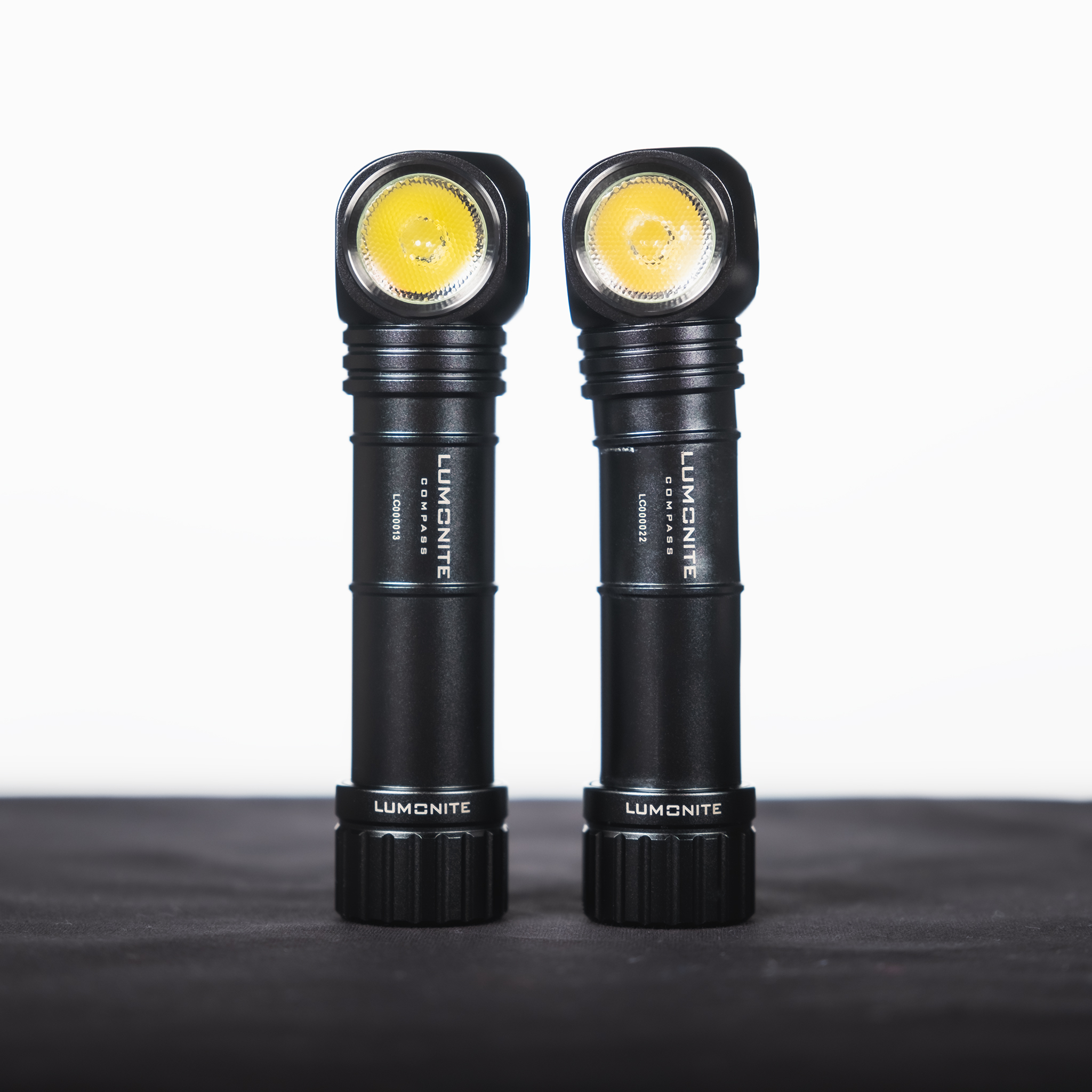
The lamp body was slightly warped during the test, but the lamp remained fully functional even after the test.
IPXX - Water and dust resistance
In the water and dust resistance test, the IP rating of the luminaire was tested according to the IEC 60529 standard. The purpose of the test was to determine whether the luminaire would pass the IP69 rating assigned to it, which means that it is completely protected against dust and water. The highest IPX9 standard for water tightness means that the object being measured must withstand high pressure (8000 - 10,000 Kpa) and a speed of 14-16 L/min of water sprayed onto the surface from a close distance (10-15 cm away). In the IPX9 test, the luminaire was placed on a rotating stand that rotated at a speed of 5 revolutions per minute. The Compass was sprayed with high-pressure water at a temperature of 80°C - 5°C from four different directions (0°, 30°, 60° and 90°) for 30 seconds (per direction) at a rate of 15 l/min. The Compass passed the test with flying colors: The lamp functioned completely normally after the test, no water was found inside the frame, i.e. the battery compartment, and there were no physical signs of damage to the lamp.
The test document can be found here: Topterster IPX9 -test documentation - Lumonite Compass
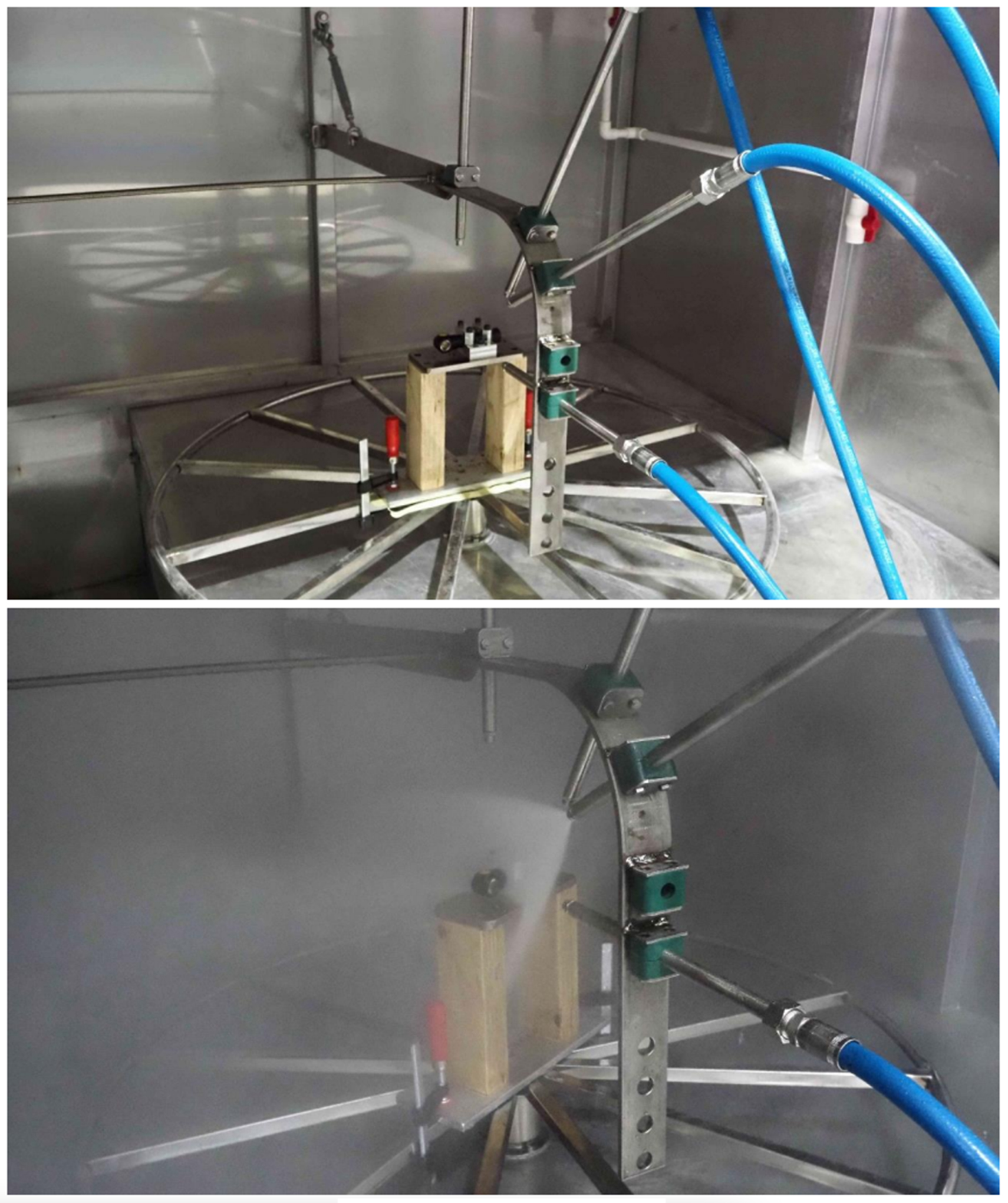
In the IPX9 test, water ranging from 80°C to 5°C was sprayed onto the luminaire from four different directions at a flow rate of 15 l/min.
The purpose of the dust tightness test is to ensure that the luminaire is completely dust-tight in accordance with the IP6X classification. This means that after testing it, no dust should be visible in the battery compartment. For this test, the Compass was placed in a Vötsch VDT 1000 A dust chamber, and a vacuum pump was attached to the luminaire’s battery compartment. The vacuum pump kept the pressure inside the battery compartment below the ambient air pressure in the chamber, so that the talcum powder used in the test would be sucked into the luminaire’s body if there were any areas in the body that did not meet the IP6X classification.
The dust chamber was filled with 2 kg of talcum powder per cubic meter, and air was drawn from the dust chamber through the luminaire’s body using a vacuum pump. If there were any areas in the luminaire’s body that did not meet the IP6X classification, talcum powder would also enter the body with the air. The test was designed to suck air through the lamp body at a rate of 80 times the lamp's own volume, but with an air flow rate of no more than 60 lamp volumes per minute and a pressure of no more than 2 kPa.
To put the lamp through the ultimate test, the chamber used talcum powder so fine that it was impossible to determine the size of the particles with the naked eye. In fact, the dust was so fine that it could pass through a sieve made of square meshes with a diameter of 50 µm per wire and a diameter of 70 µm per mesh.
After the test, no talcum powder was found in the lamp's battery compartment, and the lamp passed the IP6X test perfectly.
The test document can be found here: Toptester IP6X -test documentation - Lumonite Compass
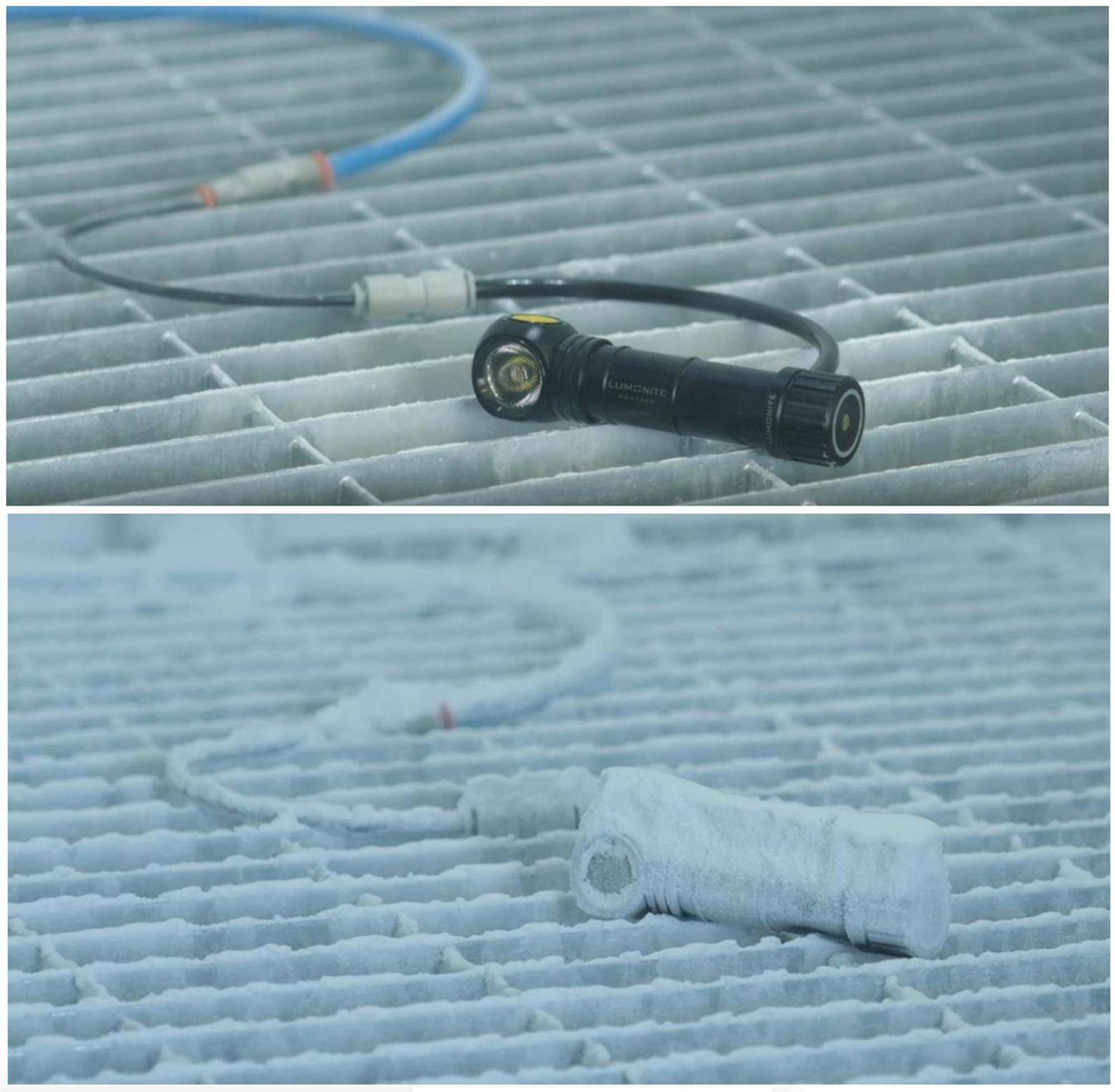
In the IP6X test, the luminaire was exposed to very fine talcum powder, which did not penetrate the frame at any point.
MIL-STD Standard Tests
In addition to the tests mentioned above, the LUMONITE Compass multi-function light has been tested against extreme conditions in accordance with the MIL-STD-810H standard.
"The MIL-STD test is a set of standards published by the United States Department of Defense. The aim of the test is to determine the effects of the environment and the life cycle of devices or products. It also examines the performance of materials when exposed to environmental influences during their service life. MIL tests are designed to test products that are intended to be used in extreme conditions. Manufacturers of these types of devices and products must ensure that the product is truly suitable for extreme conditions. In practice, MIL tests include several different tests, and thus environmental conditions. In them, the product is exposed to dust, rain, vibration, as well as extreme temperatures and shocks."
The Compass v.7 light was tested for resistance to humidity, shock and temperature fluctuations in accordance with the MIL-STD standard. Next, we will explain the methods used to perform these tests and the results.
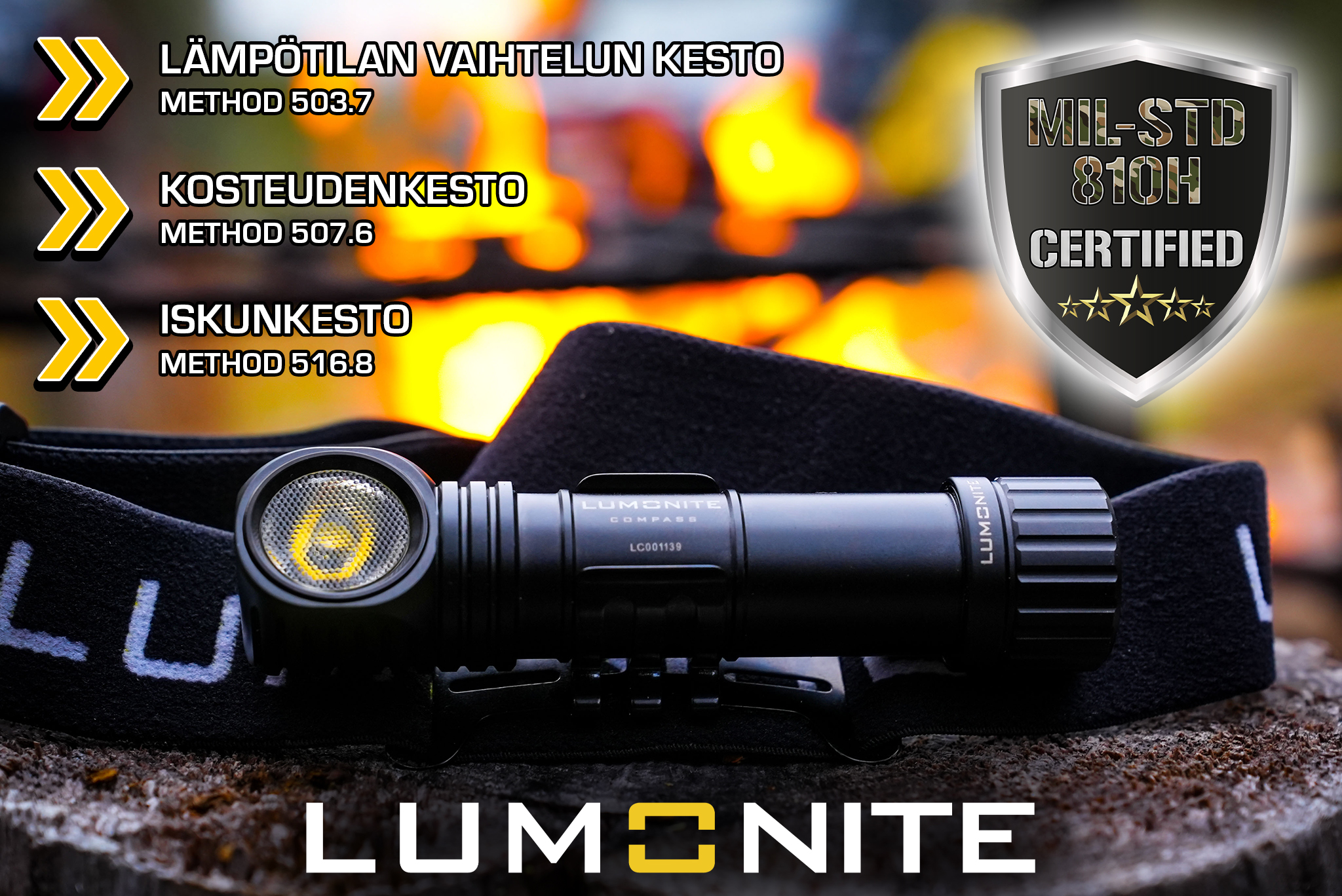
Humidity Resistance - MIL-STD 810H, Method 507.6, Humidity
The objective of the humidity resistance test was to determine whether the lamp and its headband remain functional during high humidity and simultaneous temperature fluctuations. In the test, the lamp and headband were placed in a Weiss environmental chamber, the temperature and humidity of which were monitored using SIMPATI software. Measurement data on temperature and humidity were obtained using VAISALA temperature and humidity measurement equipment. In the test, the air temperature was varied between 30°C and 60°C in cycles of several hours, with the relative humidity (Rh) of the air constantly being 95.
The relative humidity of the air indicates the amount of moisture in the air compared to how much it could be at most. In other words, if the relative humidity of the air is 100, the air is so saturated with water that it can no longer hold any more water vapor. The 95% relative humidity used in the test is therefore very high. This, combined with a very hot temperature (+30°C - +60°C), creates an extreme environment in which, for example, it is very difficult for a person to spend a long time continuously. It goes without saying that this is a very challenging environment that puts the structure of the lamp to the ultimate test. The stress test of the Compass lamp in this environment lasted 10 days.
During the test, the Compass remained functional, and functioned completely normally also after the test. No physical damage was found on the lamp. Some variations in the gloss of the body surface were observed after the test, but this did not affect the function of the lamp. No physical damage was observed on the headband after the test, and both passed the test with flying colors.
The test document can be found here: MIL-STD-810H Humidity - Lumonite Compass
Temperature Shock Resistance - MIL-STD-810H, Method 503.7, Temperature Shock
The temperature shock test was designed to determine whether the luminaire would maintain its performance during and after extreme temperature fluctuations. The test was conducted using multi-cycle "temperature shocks" using two different Espec temperature chambers. The temperature data from the chambers was recorded using ERC100 software.
In the test, the luminaire was exposed to temperatures ranging from -40°C to +40°C. The luminaire was held at a specific temperature for 30 minutes at a time, after which it was transferred to another chamber with a pre-set temperature in less than a minute. This gave the Compass less than a minute to adapt to the radically changing temperature.
At the beginning of the test, the Compass was placed in a temperature chamber set at -40°C. When the chamber temperature had dropped to -40°C, the luminaire was kept in the chamber for 30 min according to the test procedure. After this, the Compass was manually moved to another chamber with a temperature of +40°C, where it was also kept for 30 min. Three temperature cycling cycles were performed, after which the chamber temperature was changed to room temperature. After the test, the luminaire showed no physical signs of damage and functioned completely normally, so it passed the test without any problems.
The test document can be found here: MIL-STD-810H Temperature Shock - Lumonite Compass
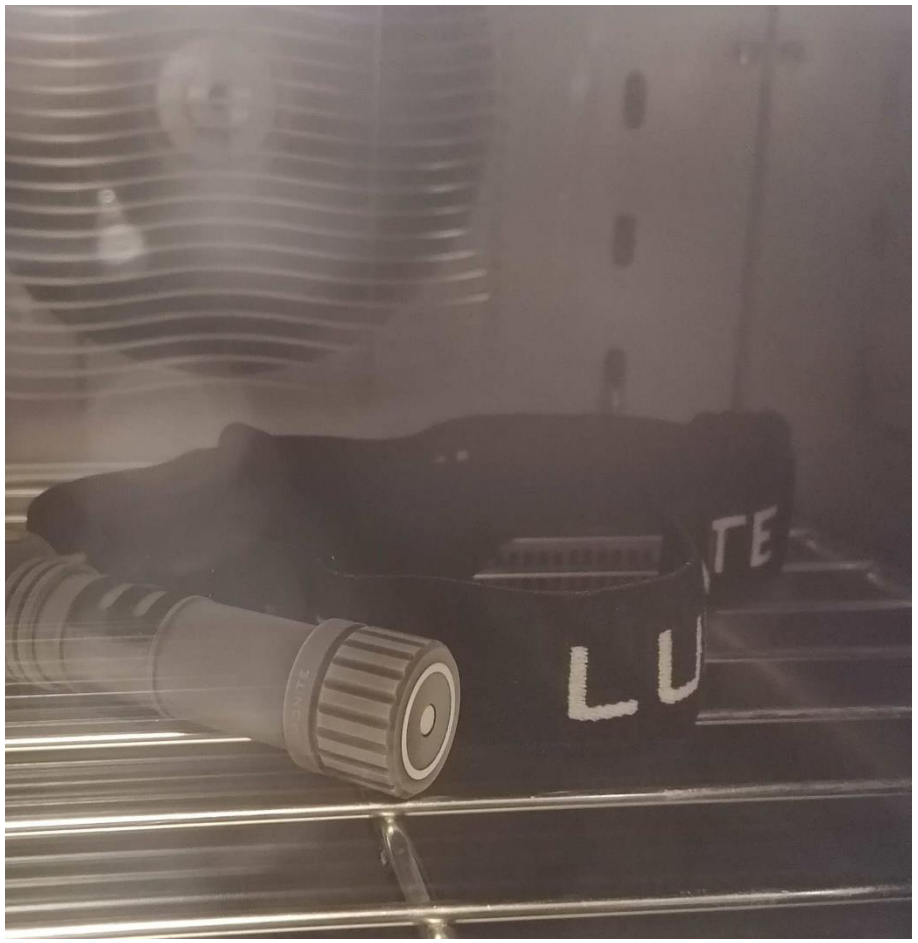
In the temperature stress test, the luminaire was moved from a -40°C chamber to a +40°C chamber three times.
Shock Resistance - MIL-STD-810H, Method 516.8, Shock
In the MIL-STD test measuring shock resistance, the goal of the luminaire was to remain functional during and after extreme physical stress, i.e. shocks from different directions. In the test, the luminaire was attached to an aluminum jig built for it (Figure), which was used to attach the lamp to a shaker that created vibrations/shocks. The control accelerometer was attached to the aluminum jig, and the backup sensor was attached to the bottom of the jig.
The luminaire was turned on and given 100 shocks from six different directions with a force of 70 G at 6 ms intervals. The Compass remained on throughout the test, and no deviations or changes in its operation were observed during or after the test. The luminaire therefore passed the test with flying colors.
The test document can be found here: MIL-STD-810H Shock - Lumonite Compass
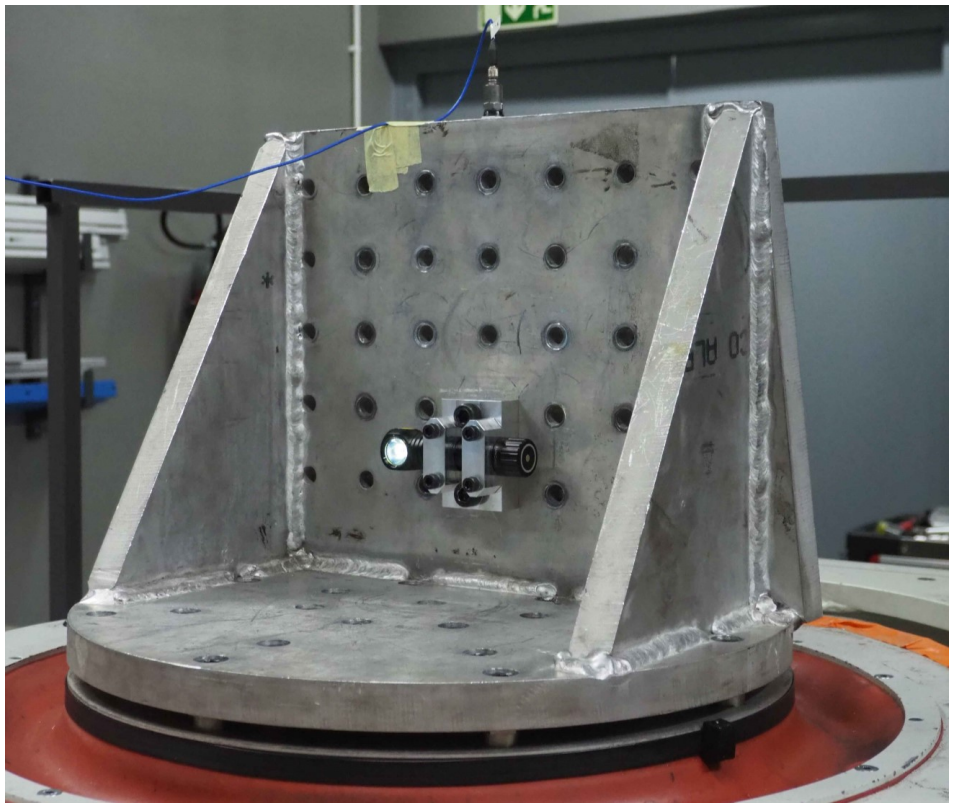
In the shock resistance test, a shaker that creates shocks and vibrations subjected the luminaire to shocks with a force of 70 G from different directions.
Corrosion Resistance - MIL-STD-810G, Method 509.6, Salt Fog
The purpose of the salt fog test, which measures corrosion resistance, was to determine whether the Compass could withstand salt fog conditions without breaking or developing corrosion on its surface. In the test, the Compass was placed in a salt fog chamber (Weiss SaltEvent SC/KWT 1000) with a temperature set at 35°C ± 2°C. The salt fog solution was prepared by dissolving 50 g ± 5 g sodium chloride (NaCl) in 1 liter of demineralized water. The pH of the salt fog solution was between 6.5 and 7.2 and its drop rate was 1-3 ml/h.
The Compass was in the salt fog chamber for two 24-hour cycles (total of 48 hours), and after both cycles the luminaire was placed in a separate chamber to dry for 24 hours. The temperature in this chamber (Vötsch VSC 7048-15) was ambient and the relative humidity was below 50%. After the second drying period, the Compass was washed with demineralized water and dried, after which the testing process was complete.
The prerequisite for a successful test was that the luminaire had to function properly and there had to be no corrosion. Both points were met, meaning the test passed with flying colors. According to the test report, a small corrosion spot was found on the back of the Compass, but the surface is aluminum, which does not form such corrosion. According to the report, the corrosion spot may be caused by metal particles adhering to the surface.
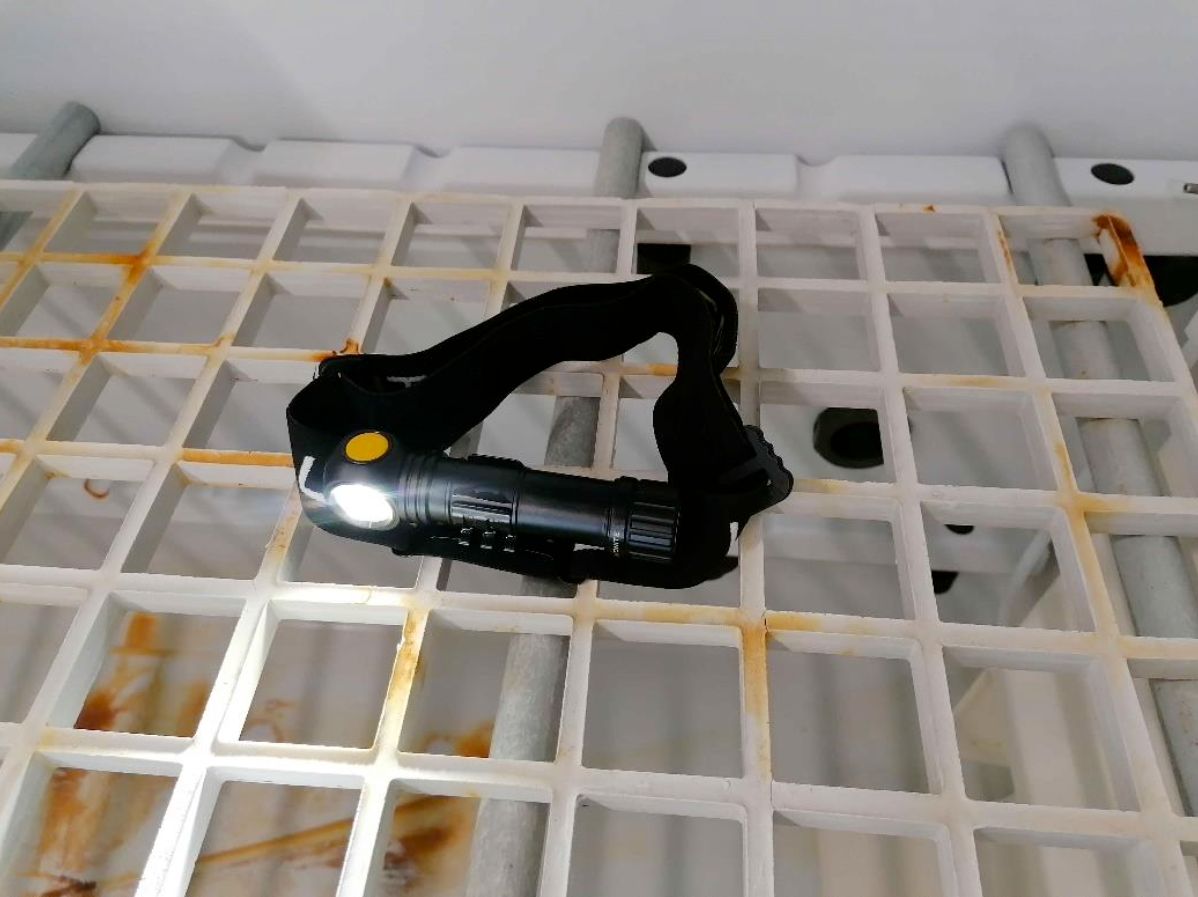
In the test, the luminaire was kept in this salt spray chamber for a total of two 24-hour cycles.
The light can be found here: LUMONITE COMPASS
Shop reviews
4.6
number of ratings 166071- Schnelle Lieferung ...Schnelle LieferungC D 19.10.2026

0
0
- Sehr guter Service und Kommunikation ...Sehr guter Service und KommunikationHeiko D 19.10.2026
0
0
- Prima gelaufen ...Prima gelaufenHeiko D 19.10.2026
0
0
- Apu tuli kuin apteekin hyllyltä...Apu tuli kuin apteekin hyllyltäAri N 19.10.2026

0
0
- Nopeaa reilua...Nopeaa reiluaAri N 19.10.2026
0
0
- 5...5Svein-arne F 19.10.2026

0
0
- Top !!!!...Top !!!!D P 19.10.2026
1
0
- Schnelle Lieferung !!!!!...Schnelle Lieferung !!!!!D P 19.10.2026
1
0
- God pris og rask levering ...God pris og rask leveringKjetil B 19.10.2026
0
0
- Read moreDom hjälper en fort och proffsigt där kan många andra företag och organisationer ta lärdom av stor tumme upp ...Dom hjälper en fort och proffsigt där kan många andra företag och organisationer ta lärdom av stor tumme uppDaniel T 18.10.2026

0
0